
Africa
Uniting the East: Somalia joins the East African Community
by Neo Allert

African regional integration seems to be making its comeback with the latest expansion of the East African Community (EAC). First established in 1967 and re-established in 2000 after an early collapse in 1977, the EAC has been trying to unite the diverse and often conflicting nations of East Africa under the banner of a mutually beneficial economic union.
After admitting South Sudan in 2016 and the Democratic Republic of Congo in 2022, Somalia is the latest state to join this regional bloc. On 24 November the war-torn state on the Horn of Africa became the eighth participant in this project of regional integration, adding another 17 million people to the EAC market. This step has been viewed by many as ‘a beacon of hope’ – to use the words of the chief economic advisor of the Somalian president – for a country crippled by terrorism and natural disasters.
Asia
Pakistan’s Mass Deportation of Afghan Refugees
by Mac Brennan
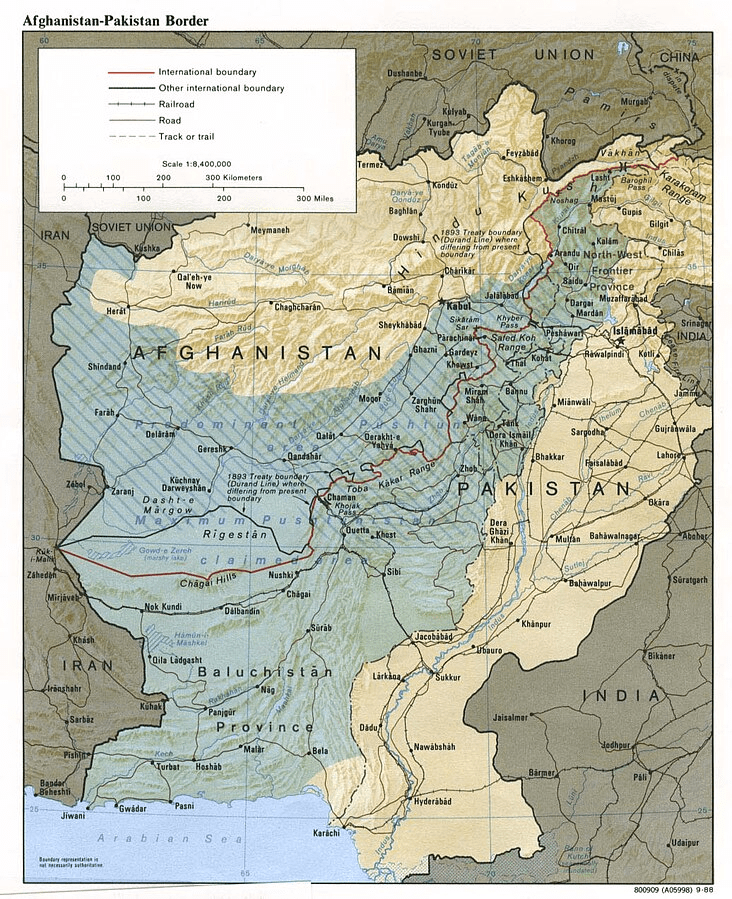
On 4 October the Pakistani Minister of the Interior announced that all undocumented immigrants in the country must leave by 1 November, a policy that targets almost 3.8 million Afghani refugees residing in the country as a result of the 1979 Soviet invasion, and the 1996 and 2021 Taliban takeovers. Since the early 2000’s Pakistan has suffered from intermittent terrorist attacks which the government attributes to the Tehreek-e-Taliban Pakistan (TTP). Politicians’ calls for deportations of the refugees began gaining traction as the attacks of the TTP or related groups became more frequent. Journalists believe the 6 September attack on Chitral pushed the Government to finalise the policy.
Between 4 October and 1 November, more than 140,000 people left Pakistan. Since 1 November the Pakistani military has committed mass deportation raids, including home invasions to remove suspected undocumented people. Many refugees were born in Pakistan or were political enemies of the Taliban, but any person without official Pakistani documentation is included in the order. In response, the Taliban claims that all those returning will be granted amnesty. Human rights organisations do not consider this claim to be legitimate, as it was also given to Democratic-era officials who were later assassinated.
Europe
The Netherlands: a triumph for the anti-Islam party?
by Freddie Weaver

Described as ‘one of the biggest political upsets in Dutch politics since World War II’ by the Associated Press, the Dutch general election held on 22 November has resulted in the anti-establishment Party for Freedom (PVV) winning the most seats in the Dutch parliament, prompting uncertainty as to how a governing coalition can be formed.
Geert Wilders, the leader of the PVV, has expressed interest in starting negotiations with other parties in the Dutch parliament, as elections in the Netherlands almost always result in a coalition government. However, most other party leaders have refused to negotiate with the PVV, due to Wilders’ controversial opposition to Islam, immigration, and the European Union; with several leaders citing Wilders’ support for the Netherlands exiting the European Union and a ban on Muslim immigration to the country.
A veteran in Dutch politics, Wilders has long been known for his hardline views, and has been protected by armed police as a result of death threats since 2004. Despite the controversy surrounding his views, the election result reflects concerns by a number of Dutch voters about immigration, especially with the country facing both a major housing shortage and record levels of net migration.
Oceania
New Zealand Centre-Right Form Government
by Aidan O’Connor
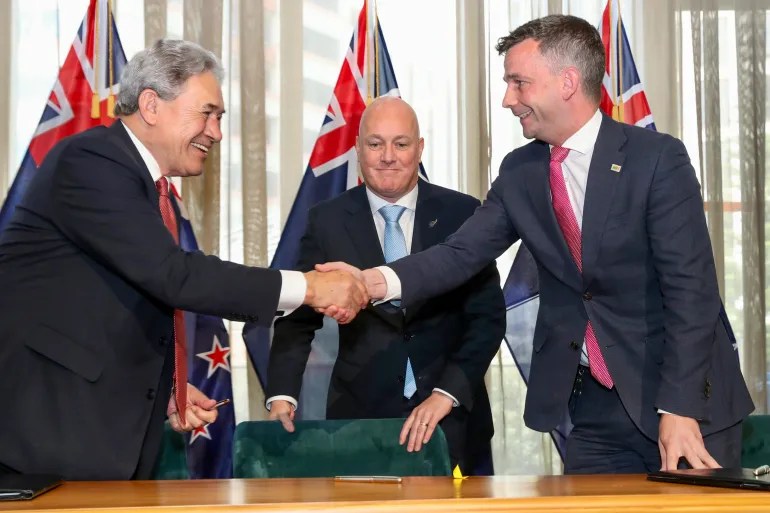
New Zealand’s centre-right National Party have finalised a coalition agreement, ensuring the formation of a new government following the Labour Party’s crippling defeat in October’s general election. The National Party secured the agreement with the libertarian ACT party and the populist New Zealand First party. The new coalition has pledged to: cut taxes, increase policing numbers, and restructure the central bank.
New Zealand First leader Winston Peters is set to become Deputy Prime Minister and Foreign Secretary, with ACT leader David Seymour taking over the role of Deputy Prime Minister half-way through the parliamentary term. On 24 November, National Party leader Christopher Luxon announced that ‘our government will rebuild the economy to ease the cost of living and deliver tax relief to increase the prosperity of all New Zealanders’. However, with only three-year terms, the new coalition won’t have too long to deliver on their ambitious promises.
North America
Too ambitious, or not far enough? Biden Issues landmark AI regulation in new Executive Order
by Harvey Young
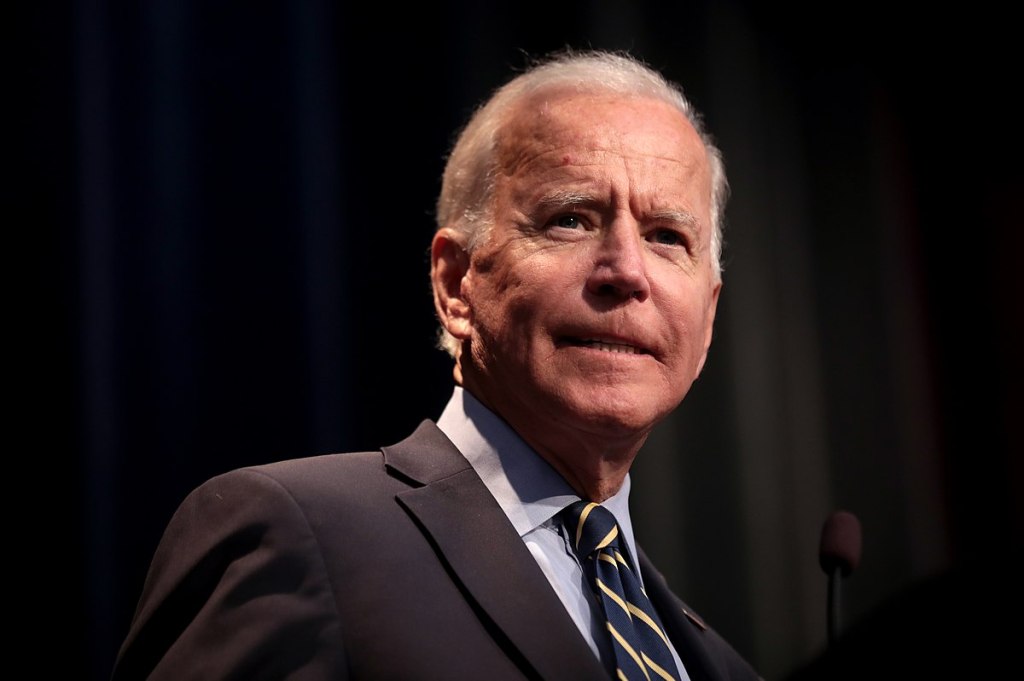
On 30 October, US President Joe Biden signed an executive order promising to ensure ‘safe, secure and trustworthy Artificial Intelligence’, the US’ first set of regulations directly aimed at AI. As the home of some of the world’s most important AI firms, such regulation could have a monumental impact on the development and impact of this technology which has potential to revolutionise human activity. However, many have warned of the great risks involved with AI developments and governments have started implementing measures to try and avert these.
Biden’s executive order builds on previous commitment from AI companies in eight different ways; ‘New Standards for AI Safety and Security’, ‘Protecting Americans’ Privacy’, ‘Advancing Equity and Civil Rights’, ‘Standing Up for Consumers, Patients, and Students’, ‘Supporting Workers’, ‘Promoting Innovation and Competition’, ‘Advancing American Leadership Abroad’ and ‘Ensuring Responsible and effective government use of AI’.
Whilst these regulations will undoubtedly have a major impact on the development and use of AI in the US and, therefore, the world, its long-term implications are impossible to predict. Will they be enough to contain potential risks? Will they overbearing and impede AI’s potential uses? Will this make American AI firms uncompetitive on the world stage?
South America
Suriname in debt-talks with China over rescheduling interest payments
by Orestis Sechas

Suriname is hoping to strike a new deal with China by mid-December 2023 to reschedule payments on its debt beyond 2024. Through this deal, the country wants to restructure its international debt and avoid repeated cycles of fiscal difficulties going forward, having become only the second nation to default on its sovereign repayments in the aftermath of Covid pandemic.
In an interview with Reuters, Suriname’s Foreign Minister provided an update on bilateral debt negotiations with China, in which he reported that Suriname and China have taken their discussions on rolling over the existing agreement past next year’s conclusion as far as they can and are close to a new deal. If a deal is confirmed, the impending agreement would mark significant progress in Suriname’s multi-pronged efforts this year to strengthen its financial position amid ongoing economic challenges going forward.
According to the Suriname Debt Management Office, the country owes approximately $540 million to Chinese creditors, of which nearly $130 million is currently in arrears. Fortunately for Suriname, the terms of the loans do not include any concessions, meaning that China cannot seize any of its assets should the country continue to face challenges in making repayments.
 York Global Affairs