
Africa
The rematch of the decade: Weah vs Boakai
by Neo Allert

Image credit: Oona Räisänen (wikipedia)
Liberia’s 2023 general election has been in full steam since the polling stations opened on 10 October in Africa’s oldest republic. Despite nearly all votes having been counted, it still remains uncertain who will become the country’s next president. With the main candidates George Weah and Joseph Boakai both failing to reach the 50 percent threshold in the presidential election, they will very likely have to enter a second round of elections. The vote has been nearly evenly split between Weah, the incumbent president, and Boakai, the opposition candidate and former vice-president. Both received just above 43 percent of the vote (Weah: 43.8 percent; Boakai: 43. 54 percent).
George Weah, who has been running on a campaign focused on social, educational and economic reform may have seen the result as an upset. The former professional football striker had been elected in 2017 with an overwhelming majority of 61.5 percent, and his inauguration marked the first fully democratic transition in 74 years. Battling for re-election against the same candidate as in 2017, Boakai, Weah’s popularity seems to be waning. It remains to be seen who will be able to mobilise their supporters in order to carry away the presidency.
Asia
Russia: suggestions of illegal arms distributions between the country and North Korea
by Matt Atkins

Image credit: Royal United Services Institute
In response to Putin’s unprovoked invasion of Ukraine in February 2022, countries around the world have placed economic sanctions on Russia, sanctions that have been effective in blocking Russian access to some of the technology required to manufacture weapons. However, it appears Russia has been attempting to bypass this by procuring weapons from North Korea.
Throughout October, satellite images (obtained by British researchers at the Royal United Services Institute and backed up by the U.S.) show Russian ships loading cargo at the North Korean port of Rajin and unloading it at Dunai in Russia. Although it has not been verified that the containers are loaded with arms, there is a Russian military facility nearby, where it is thought that the arms are stored before being sent to Russian forces in Ukraine. Such actions would violate the United Nations ban on arms distribution by North Korea imposed after the regime’s belligerence in recent years. However, what may be more concerning to Ukraine’s allies is the ability of Russia to circumvent sanctions to carry out its aggressive foreign policy.
Europe
Racism on the rise in Europe
by Owen Buchan

Image Credit: Jon Tyson (Unsplash)
The European Union Agency for Fundamental Rights has just finished a report on an extensive survey on the experiences of racism in 13 European nations carried out in 2022. The survey included 6,752 black people from Austria, Belgium, Denmark, Finland, France, Germany, Ireland, Italy, Luxembourg, Poland, Portugal, Spain and Sweden. Participants were asked about their experiences of racism from a variety of institutions such as: education, employment and healthcare in addition to the extent of their racism; such as harassment or violence.
The report on the survey has concluded that racism is ultimately on the rise in Europe, a “pervasive and relentless” issue, with 45 percent of overall respondents reporting they had experienced racial discrimination in some form. This is a sad step backwards for Europe, with the last report from 2016 finding that only 39 percent of black people had faced some form of racial discrimination. The worst offender of the 13 nations surveyed was Germany, with 76 percent of survey respondents feeling like they had experienced racial discrimination within the past five years.
North America
Greenland women demand compensation for forced birth control
by Harvey Young
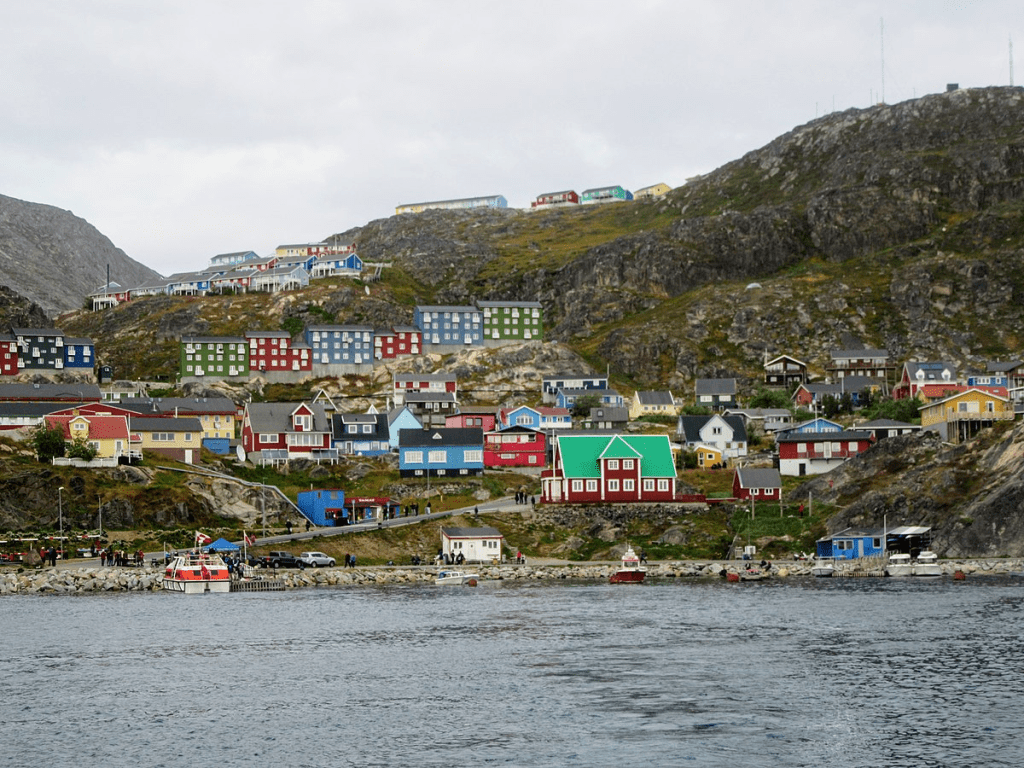
Image credit: amanderson2 (wikimedia commons)
Earlier in October, 67 Greenlandic women between the ages of 70 and 80 came forward demanding compensation for forced birth control committed by the Danish government, as it has been revealed that children as young as twelve had DUI coils fitted during school health exams between 1966 and 1970. Since Greenland gained limited independence in 1953, the Danish government had been obliged to provide welfare to Greenland’s population, but increasing costs led to implementation of population control measures until Greenland was given control over healthcare in 1991.
The Danish and Greenlandic governments have already announced an investigation into the scandal which is due to conclude in May 2024. However, many Greenlandic women are evidently tired of waiting and have launched a lawsuit to demand compensation for the lasting daming this birth control has caused them. One of the Greenlandic women demanding compensation, Naja Lybert, argued that ‘there have been violations of the law and human rights’ whilst one Danish MP went further and called it a genocide.
It remains to be seen how, or if, these women will be compensated and in what way this scandal could help Denmark and Greenland reckon with their troubled colonial past.
Oceania
Australia: severe bushfires affecting state of Queensland
by Freddie Weaver

Image Credit: Matt Palmer (Unsplash)
Emergency warnings have been issued across the Australian state of Queensland after more than 60 deadly bushfires spread across the area on 26 October (AEST time). The 26 October fires were just some of the more than 400 fires that firefighters have had to battle this week. Unusually hot and dusty conditions, alongside very low rainfall, have meant that firefighters have struggled to fight back against the fast-spreading fires, with 32 homes destroyed and two deaths reported in the Tara area of the state on 26 October.
Senior Sergeant Jeff Magnus of the District Disaster Management Group for the northwest of Queensland said that firefighters were unprepared due to unusually wet weather in the country at both the start of the year and in June and July, and that this had ‘prevented back-burning operations so the fuel loads are incredible across the northwest.’
The extensiveness of the fires has led to comparisons with the destructive 2019 Black Summer bushfires, where more than 90 bushfires were battled at once. Despite the damages, the emergency warnings are expected to drop from ‘extreme’ to ‘high’ in Queensland from the week beginning the 30 October.
South America
US -Venezuela Deal Branded Major Breakthrough
by Aidan O’Connor

Image credit: Susan Melkisethian (Flickr)
The Venezuelan Government, opposition groups, and the United States have managed to broker a deal to lift economic sanctions in return for free and fair elections next year. At a ceremony in Barbados on 17 October, the Venezuelan Government, and the opposition alliance ‘Unity Platform’ announced plans for presidential elections in the latter half of 2024. Crucially, conditions to the announced agreement included the presence of international observers to verify the legitimacy of the proposed elections. Subsequently, the United States Treasury Department lifted some sanctions on Venezuelan oil, gas, and gold sectors. However, along with the lifting of sanctions came a warning they could be reimposed if the election conditions are not met by the government in Caracas.
Venezuela has been plagued with political and economic instability following a consistent trend of democratic backsliding under President Maduro and his predecessor, Chavez. A country rich in natural resources, sanctions imposed by the United States on the Venezuelan economy have resulted in the highest levels of poverty in South America. Although all parties in the recent agreement acknowledge much more work is required to restore stability to Venezuela, all have agreed recent events represent a significant step forward.
 York Global Affairs