
Africa
Foreign Minister out as planned Haiti mission becomes embroiled in controversy
by Aidan O’Connor

image credit: AMISOM Public Information (Flickr)
The controversy surrounding Kenyan police deployment to Haiti has been cited as a key reason for the demotion of Alfred Mutua from Kenya’s Minister for Foreign and Diaspora Affairs to Minister of Tourism and Wildlife in President Rutu’s first government shake-up. Defence Minister William Ruto, who has been noticeably quiet in relation to the police deployment, retained his position. The mission, approved by the UN Security Council on 2 October, planned to see 1000 Kenyan police officers deployed to Haiti to tackle rapidly escalating gang violence.
However, despite Kenya’s history of sending peacekeepers to unstable regions, opposition from within Kenya has thrown the mission into uncertainty. Opposition leader Raila Odinga joined those calling for the mission to be cancelled due to the risk posed to Kenyan lives. Furthermore, a Kenyan court temporarily blocked the government plans due to a petition arguing that such a deployment outside of Kenya would be illegal.
The court restriction expires on 24 October but with opponents fanning the flames of doubt, ambiguity over whether the deployment will take place looms large.
Asia
Escalation of Israel-Palestine conflict puts prospects of a Saudi-Israel normalisation deal into doubt
by Harvey Young

image credit: Garton R (Wikimedia Commons)
The deadly increase of violence between Israel and Hamas since 7 October has raised serious doubts about the future of a U.S.- backed attempt to normalise relations between Israel and Saudi Arabia.
Alongside many Arab states, Saudi Arabia has never recognised Israeli sovereignty and has historically been a vehement supporter of the Palestinian side of the conflict. As the world’s largest oil exporter, Saudi Arabia was instrumental to the catastrophic economic retaliation against western support of Israel during the 1973 Yom Kippur War, highlighting the stakes of the Saudi’s reaction to the recent conflict.
In September, there were suggestions that attempts to secure a normalisation deal would succeed;, however, the Muslim world’s outrage towards Israel’s retaliatory bombing of Gaza seems to have put this into doubt. In an official statement, Saudi Arabia called for ‘an immediate halt to the escalation between the two sides’ whilst blaming the situation on ‘the continuation of the occupation [of Palestine] and the deprivation of the Palestinian people of their legitimate rights’ and claiming it ‘firmly supported the Palestinian cause’. Some analysts claim that the thwarting of a Saudi-Israel normalisation deal may have been one of the aims of Hamas’ attack against Israel.
Europe
Finland: ‘state actor’ may have caused gas pipeline sabotage
by Freddie Weaver

image credit: Helio Dilolwa (Unsplash)
Finland’s intelligence services have said that damage to an underwater gas pipeline linking Finland to Estonia may have been deliberately caused by a ‘state actor’.
The 48-mile (77km) Balticconnector pipeline was shut down on Sunday 8 October following an ‘unusual’ drop in pressure, as confirmed by Finland on 10 October. A telecoms cable was also reported damaged.
In a press conference on 12 October, the Finnish Security Intelligence Service Director Antti Pelttari said that the possibility of the sabotage being caused by a state actor ‘cannot be ruled out’, but that no further details could be provided while it was still being investigated.
NATO’s secretary general Jens Stoltenberg announced on Wednesday that the damage ‘will be met by a united and determined response from NATO’ if confirmed to be a deliberate attack. These comments were followed by discussions by NATO defence ministers in Brussels on 12 October amid media speculation that the attack was caused by Russian interference.
The U.S. Secretary of State Antony Blinken stated that The U.S. also stands with Finland.
North America
U.S. Government in deadlock as Speaker ousted by own party
by Julia Kozieja

image credit: Tom Williams/CQ-Roll Call, Inc (Getty Images)
In an unprecedented move, Kevin McCarthy was voted out as Speaker of the House of Representatives on 3 October for supporting a stopgap bill. The fact that it only took eight dissatisfied Republicans to oust him emphasises Congress’ fragility and Republican disunity.
Without a Speaker, no laws or budgets can be passed or discussed – so a government shutdown could go ahead if there is no Speaker and an agreed budget when the stopgap bill expires on 17 November. Choosing a new Speaker is bound to be difficult for the divided Republicans. Previously, 15 rounds of voting were needed to elect McCarthy but this time, it could take longer since there is no clear-cut candidate. No speaker also means that domestic legislation can’t be passed, something that President Biden may have difficulty contending with before the 2024 presidential election.
Although the stopgap bill did pledge $6 billion for Ukraine, any further budgetary delays would hinder long term aid from Ukraine’s largest financial supporter, leading to significant impacts on its war efforts. The inability to pass legislation also makes it difficult for the support offered by Biden to materialise.
Oceania
Voice Referendum: Australia votes No
by Orestis Sechas

image credit: U.S. Marine Corps (Cpl. Angel Serna)
A clear majority of the Australian electorate have voted No in a historic referendum which asked voters to approve constitutional alteration that would allow indigenous communities to advise the government on issues affecting them.
The Voice Referendum, backed by Prime Minister Anthony Albanese, proposed a clear two-fold purpose; to formally recognise Torres Strait Islanders and Aboriginals as the First Peoples of Australia in the Constitution, and to establish an indigenous community agency to advise the national parliament and government on issues like: indigenous health, education and social services.
Proponents of the constitutional change argued that the inclusion of the indigenous peoples into the constitution would unite Australia and would tackle the entrenched inequality indigenous peoples still face.
However, the NO campaign saw it differently, and spoke of a ‘divisive’ referendum and ‘another layer of democracy’, which would not provide any practical outcomes.
South America
Chile reacts to on-going Israel-Palestine Crisis
by Owen Buchan
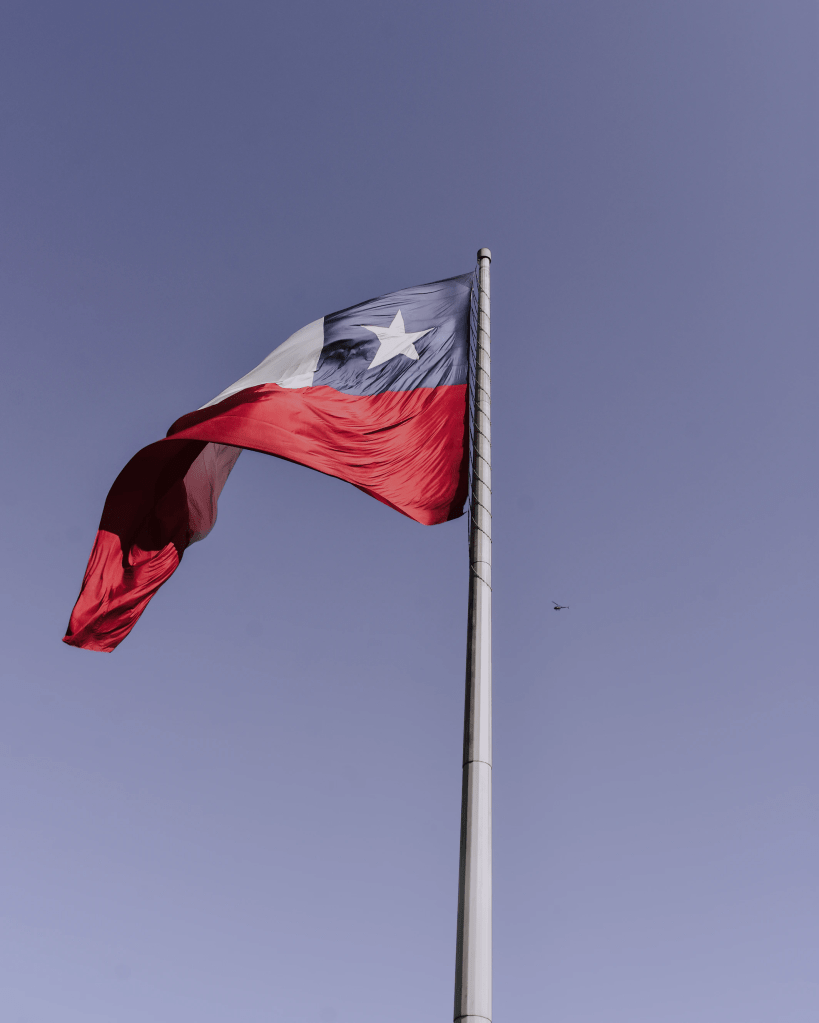
image credit: Elias Almaguer (Unsplash)
The horrific scenes unfolding between Hamas and the Israel have resulted in international condemnation from various nations. Chile is no exception.
The Foreign Minister Alberto van Klaveren expressed solidarity with all victims of the terrorist attack against Israel, stating that Chile was committed to the peace process between Israel and Palestine. President Gabriel Boric was broadly in tune with his Foreign Minister’s message and specifically criticised Israel for occupying Palestine and being the barrier towards a two-state solution.
Boric has historically voiced his support for the Palestinian people’s cause, criticising the Israeli occupation of the West Bank. Chile hosts the largest Palestinian diaspora population outside the Middle East, standing at 500,000 people. The Chilean-Palestine population is a cultural staple of Chile and is a very politically active community.
It is likely the diaspora will continue to be an important factor for Chile when deciding its reaction to the escalating conflict.
 York Global Affairs